Monitoring the progress of the Western Balkan countries regarding the European Pillar of Social Rights
We monitored the progress on the European Pillar of Social Rights (EPSR) in Western Balkan countries.


We monitored the progress on the European Pillar of Social Rights (EPSR) in Western Balkan countries.

The findings of the Con3Post project indicated that immigration of third country national (TCN) workers is driven largely by economic discrepancies and wage disparities between the third countries and EU countries.

The study compares the findings from three Con3Post regional reports on mobility and posting flows between EU-sending, EU-receiving and third countries.
Policy Brief: Here, not to stay! The posting of third country nationals to Austria by Danaj et al. This Policy Brief describes the trend of the posting of third-country workers from Bosnia and Herzegovina via Slovenia to Austria and its drivers. It also discusses why workers from Bosnia and Herzegovina agree to be posted via…

At the beginning of April 2020, when we all have got convinced that the COVID-19 pandemic is likely to disrupt even more the environments in which social service users and social care beneficiaries live, and to have several negative consequences for their well-being and protection, the need for united activities of all social actors became imperative.

The report focuses on the specific regional labour mobility patterns between Bosnia and Her zegovina (BiH) as a third country, Slovenia as a sending country, and Austria as a receiving country.

The European Centre is currently updating the existing reviews on issues relevant to the European Pillar of Social Rights in the Western Balkans.
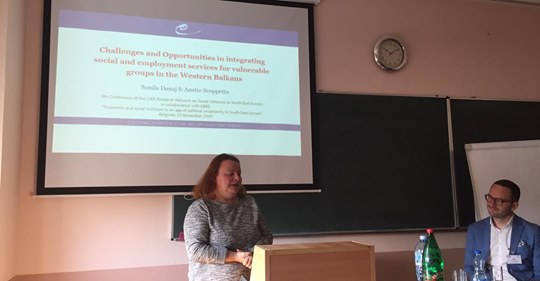
Sonila Danaj presented research on the integration of employment and social services in the Western Balkans at the 5th Conference, Faculty of Economics of the University of Belgrade, 21-22 November 2019.

The Con3Post project is set up to explore the growing phenomenon of recruitment and posting of third country nationals (TCN), most notably from the Western Balkans, non-EU Eastern Europe and North African regions, to work as posted workers in the EU construction sector.
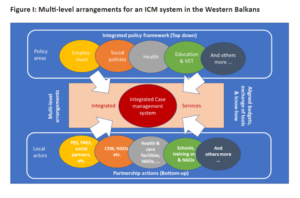
This policy brief provides insights into the application of integrated case management by Public Employment Services and Social Services institutions in the Western Balkans. The authors describe the status quo of case management and cooperative practices in the region and discuss the potentials and caveats of implementing integrated case management in such contexts. Based on…