
EESPN Spotlight: Yevgine Vardanyan on Driving Social Protection Reform in Armenia
In the latest edition of the EESPN Spotlight Series, we feature Yevgine Vardanyan, Deputy Director of Armenia’s National Institute of Labour and Social Research, whose work is helping shape some of the country’s most significant social protection reforms. From tackling extreme poverty and advancing integrated social services to supporting evidence-based policymaking and regional cooperation, Vardanyan shares insights into Armenia’s ongoing reform journey and the value of collaboration across countries. Reflecting on her long-standing engagement with the European Centre and EESPN, she highlights how peer learning, policy exchange, and joint research contribute to stronger social protection systems across the region. Read the full spotlight to discover how cooperation, innovation, and a commitment to meaningful change are helping improve outcomes for vulnerable populations in Armenia and beyond.
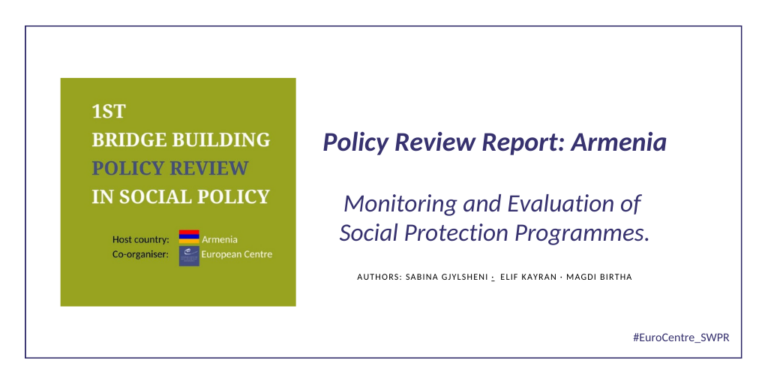
At a time of significant social reform in Armenia, Yevgine Vardanyan is helping shape a more responsive, inclusive, and evidence-based social protection system. As Deputy Director of the National Institute of Labour and Social Research (National Institute) under the Ministry of Labour and Social Affairs of Armenia, Vardanyan works at the intersection of policy research, monitoring, training, and reform implementation, supporting some of the country’s most ambitious social policy transformations.
Armenia is currently navigating a wide range of interconnected social challenges, from extreme poverty and social exclusion to housing insecurity, deinstitutionalisation of care, and the integration of refugees displaced from Nagorno-Karabakh. “We are in a very intensive period of reforms,” Vardanyan explains. “We are establishing new vulnerability assessment systems, developing integrated social services in communities, and moving towards preventive and community-based care.”
Among the reforms showing strong early promise is Armenia’s affordable housing programme for young families, which has generated significant public interest and participation. At the same time, the country is preparing to roll out a new nationwide vulnerability assessment system designed to better identify and support families facing poverty and social exclusion. While implementation has involved technical and digitalisation challenges, Vardanyan believes the reform represents an essential step forward. “We understood that the previous system was outdated and that a new approach needed to be implemented,” she says. “Evidence-based policy and cooperation with international organisations helped us move forward with confidence.”
A central feature of Armenia’s reform agenda has been the increasing focus on integrated and community-based social services. The National Institute has played an active role in this process through research, policy analysis, monitoring, and training for both ministry staff and social protection professionals across the country. According to Vardanyan, meaningful reform requires not only political commitment, but also cooperation at every level. “The main factors are cooperation with international organisations, experience sharing with other countries, engagement with communities and NGOs, and listening to beneficiaries themselves,” she explains.
Regional collaboration has become a key pillar of this work. Through partnerships and exchanges with countries including Romania, Italy, Moldova, Georgia, and several Western Balkan countries, Armenia has been able to draw lessons from both advanced social protection systems and countries facing similar structural challenges. “Experience exchange helps us navigate reforms and prevent risks that other countries have already faced,” Vardanyan notes. “We do not always need to invent completely new solutions when valuable experiences already exist.”
For Vardanyan, who also acts as European Centre’s NLO in Armenia, cooperation with the Centre and the Eastern European Social Policy Network (EESPN) has been particularly valuable in fostering sustained policy dialogue and evidence-based exchange. “I love the cooperation with the European Centre because it provides so many possibilities for discussion, experience exchange, and learning from other countries,” she says. “This is not short-term cooperation, it is coordinated, regular, and effective.”
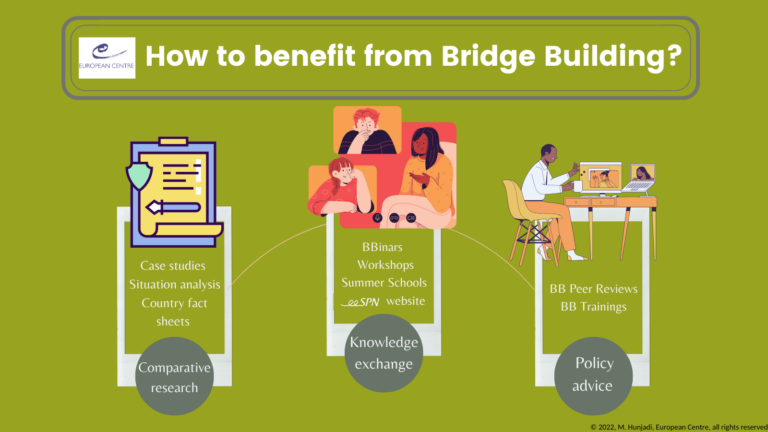
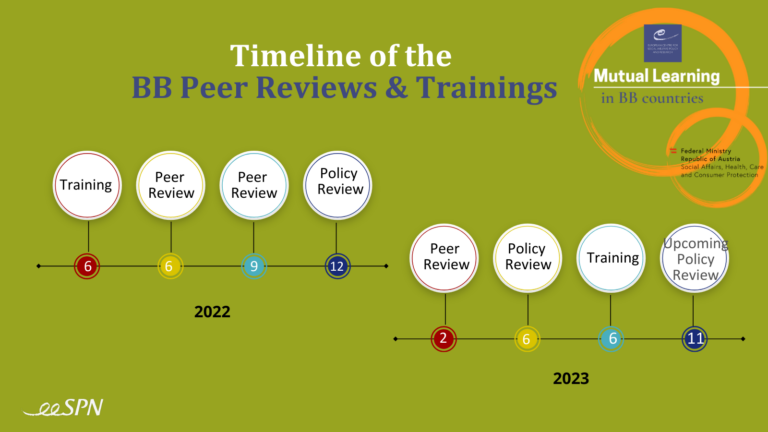
She also highlights the importance of peer reviews, joint research, and expert guidance facilitated through the European Centre, particularly in areas such as integrated social services. “The research and recommendations we developed together were very concrete and helpful for our reforms,” she explains. “This framework is really very important for us.”
What continues to motivate Vardanyan most is the opportunity to contribute directly to meaningful social change. “I do not like simply watching changes happen from the side,” she says. “I want to be involved in making those changes happen, especially in social protection, where we work with people who truly need support.” Her message to colleagues and policymakers across the region is both practical and inspiring: “Do not be afraid of change. Do not be passive. We live in a world where change is necessary and constant. Even if there are difficulties at the beginning, we must take responsibility and move forward.”