EESPN Spotlight: Oleg Barcari on Building More Inclusive Social Protection in Moldova
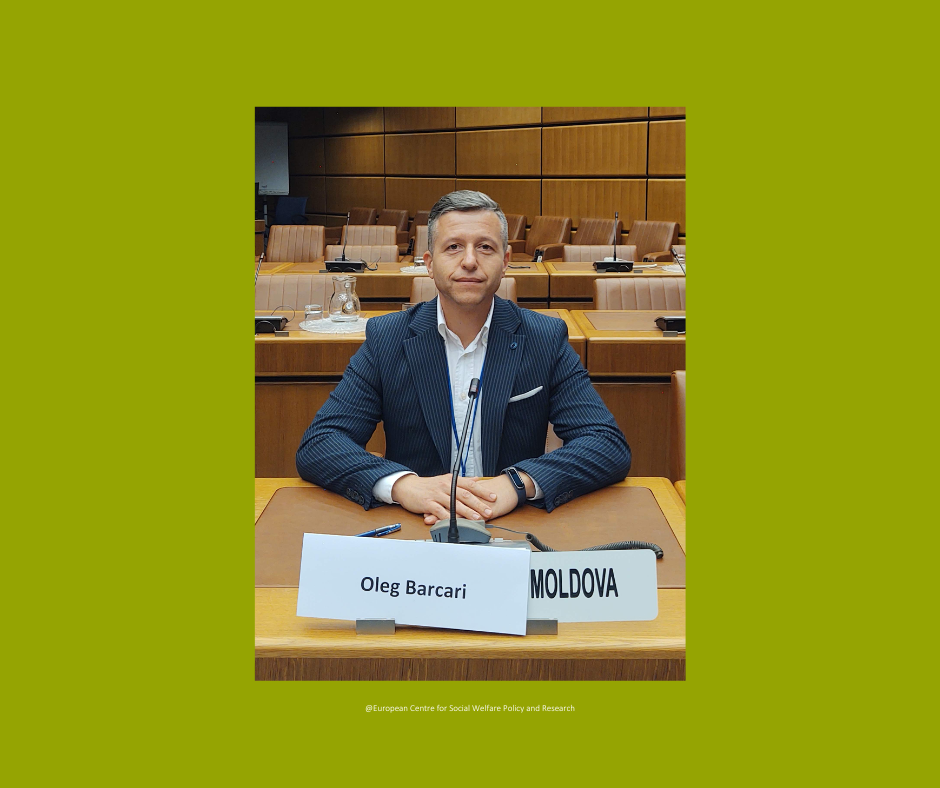
The latest EESPN Spotlight Series features Oleg Barcari from the Ministry of Labour and Social Protection of the Republic of Moldova, whose work is helping drive reforms aimed at strengthening social assistance, reducing poverty, and improving support for vulnerable populations. In the interview, Barcari reflects on Moldova’s efforts to modernise minimum income schemes, develop stronger social services, and promote integrated approaches that connect financial support with broader social inclusion measures. He also highlights the importance of regional cooperation and evidence-based policymaking, emphasizing how collaboration through the European Centre and EESPN provides valuable opportunities for policy exchange, comparative learning, and informed reform. Discover how Moldova is advancing social protection reforms and why cross-country cooperation remains essential for addressing shared challenges across the region.
At the heart of Moldova’s evolving social protection system is a strong commitment to making support more responsive, integrated, and accessible for vulnerable communities. For Oleg Barcari, Head of the Department for Policies of Social Assistance for Families with Low-Income and the Elderly and the Ministry of Labour and Social Protection of Moldova, this commitment is both professional and personal.
Focusing primarily on minimum income support policies, poverty reduction measures, and social services for older persons, Barcari and his colleagues in the Ministry, are helping shape reforms that aim to modernise social assistance in Moldova while ensuring it remains fair and sustainable. “Social protection works best when we have adequate income support, accessible social services, clear administrative procedures, and strong institutional collaboration”, he explains.
One of the Ministry’s key priorities has been tackling persistent poverty and social exclusion, particularly among low-income families, older persons, and persons with disabilities. At the same time, Moldova is addressing broader structural challenges such as demographic pressure, migration, and unequal access to services across territorial regions. According to Barcari, these realities demand stronger coordination between institutions and more integrated policy responses. “Social protection today cannot work effectively in isolation,” he notes. “We need stronger collaboration with employment, education, health, and community-based support systems.” A major area of reform has been the modernisation and digitalisation of Moldova’s minimum income support programme. The ministry has been developing more transparent and data-driven systems that simplify decision-making and improve targeting mechanisms for families in need. “The growing use of digital tools and administrative data helps us reduce fragmentation,” Barcari explains and add that “trust, fairness, and consistency matter a lot in social assistance.”
Beyond financial support, Moldova is increasingly moving toward a more integrated “cash-plus” model that connects benefits with tailored social services and case management support. Barcari sees this as a crucial step in addressing the deeper causes of vulnerability. “We are trying to better target support and understand the causes behind social vulnerability,” he says. “The benefit can serve as a foundation, while social services help address deeper human needs.”
Collaboration and regional exchange have also played an important role in shaping Moldova’s policy development. Through partnerships and policy dialogue with countries such as Romania, Lithuania, Austria, and the Czech Republic, the Ministry has gained valuable insights into minimum income schemes, long-term care, and service quality standards. These exchanges have been strengthened through cooperation with the European Centre for Social Welfare Policy and Research (European Centre) and the Eastern European Social Policy Network (EESPN). Reflecting on this collaboration, Barcari, who also acts as the European Centre’s NLO in Moldova, highlights the value of mutual learning and evidence-based exchange. “The European Centre and EESPN support our goals by creating spaces for informed comparison,” he says. “Comparative platforms help us reflect on national priorities and learn from countries facing similar challenges.”
For Barcari, regional cooperation is not simply about policy exchange, it is also about improving people’s lives through shared learning and collective problem-solving. “Regional collaboration allows us to learn from others, test our own assumptions, and avoid working in isolation,” he explains. “It is very important for me that our policy process can improve people’s lives.”
As Moldova continues reforming its social protection system, Barcari believes the future lies in stronger integration between income support, social services, and institutional cooperation. His message to policymakers across the region is clear: “This is the direction that can make social protection fairer, more credible, and more responsive to real human needs.”